

Description
Introduction to Poetry: Forms and Elements Literature Study Guide
Select the Printed Workbook or CD to see format-specific information, features, and included materials.
Poetry, in many ways, defies definition. Any restrictions would disqualify some works that are, nevertheless, poetry.
The only statement about poetry that we can make with absolute certainty is that good poetry uses what is known as "compressed language." That means that it says a lot but uses few words to do so. Every word is very valuable; the poets make their choices only after much deliberation, and we must understand each word to grasp the meanings of the poems. This word compression is the primary reason that most students claim not to understand poetry. Students who are accustomed to skimming over their lessons once and dashing off correct answers in record time will find that poetry asks much more of us than this. It invites us to calm down, sit still, and think.
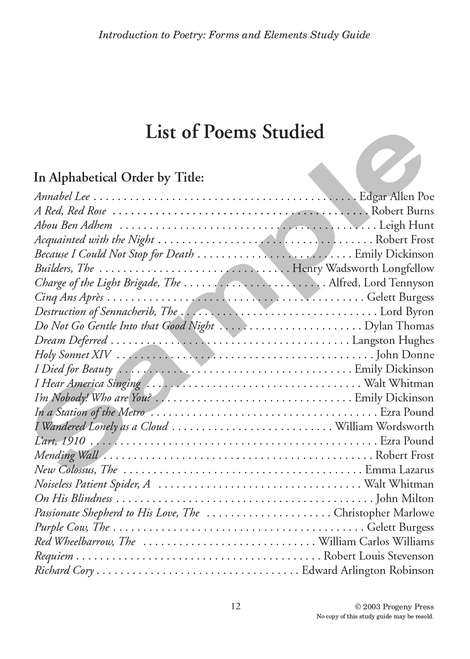
Using three short poetry anthologies, this study guide examines more than 40 well-known English-language poems, introducing the student to techniques such as rhyme and meter and various poetic forms such as the sonnet, the villanelle, the ballad, and more.
What Progeny Press' Introduction to Poetry: Forms and Elements Literature Curriculum Study Guide provides your High School student:
ELA Built for Ages 14–18 • Grades 8–12
Our faith-based literature study guide helps students strengthen their reading and comprehension skills through engaging, age-appropriate activities.
English/Language Arts credit: This is a one-quarter credit high school level Literature curriculum.
Historical Timeline
Types of Poetry: Narrative poems, lyric poems, dramatic poems.
Elements of Poetry: Lines, stanzas, words, impressions, sounds, rhyme, slant rhyme, sibilant, common meter, poetic foot, iambic tetrameter, iambic trimeter, imagery, analogy, tone.
Forms of Poetry: Petrarchan or Italian sonnet, Shakespearean or English sonnet, octave, sestet, couplet, villanelle, blank verse, haiku, ballad, limerick, terza rima, tercet, parody, Petrarchan conceits, free verse.
Literary Techniques: Enjambment, denotation, connotation, diction, alliteration, assonance, onomatopoeia, theme, poetic license, simile, metaphor, personification, paraphrasing, allusion, explication, narrative, quatrains.
Moral Lessons and Character Values: Decision making and prayer, loving God means we must love our neighbor, inner beauty, materialism, use our time wisely, the Trinity, hypocrisy, grace in weakness, death, peace, serve one another, contentment, authority, and hope.
Activities and Writing Assignments: Research Elihu Burritt. Writing activities include connotations, couplets, senses, feelings, haiku, limerick, parody, sonnet, villanelle, ballad, terza rima, free verse. Paraphrase a poem and then write an explication of the same poem.
Suggestions for Further Reading: We include an in-depth reading list of more poetry by the same authors and other books that tie in with, or are similar in tone or structure.
Introduction to Poetry: Forms and Elements Literature Study Guide - Workbook
Formatted with your High School student in mind, Progeny Press literature study guides provide in-depth lessons and writing assignments that strengthen reading comprehension, expand vocabulary, and develop advanced literary analysis and essay writing skills. Each guide challenges students to think critically and engage meaningfully with the text, without unnecessary busywork that diminishes the joy of reading.
For over 30 years, homeschool families, co-ops, and Christian schools worldwide have trusted Progeny Press to provide rigorous, faith-based English and Language Arts curriculum that inspires thoughtful readers and confident writers.
What Progeny Press' Introduction to Poetry: Forms and Elements Literature Curriculum Study Guide provides your High School student:
ELA Built for Ages 14–18 • Grades 8–12
Our faith-based literature study guide helps students strengthen their reading and comprehension skills through engaging, age-appropriate activities.
English/Language Arts credit: This is a one-quarter credit high school level Literature curriculum.
Historical Timeline
Types of Poetry: Narrative poems, lyric poems, dramatic poems.
Elements of Poetry: Lines, stanzas, words, impressions, sounds, rhyme, slant rhyme, sibilant, common meter, poetic foot, iambic tetrameter, iambic trimeter, imagery, analogy, tone.
Forms of Poetry: Petrarchan or Italian sonnet, Shakespearean or English sonnet, octave, sestet, couplet, villanelle, blank verse, haiku, ballad, limerick, terza rima, tercet, parody, Petrarchan conceits, free verse.
Literary Techniques: Enjambment, denotation, connotation, diction, alliteration, assonance, onomatopoeia, theme, poetic license, simile, metaphor, personification, paraphrasing, allusion, explication, narrative, quatrains.
Moral Lessons and Character Values: Decision making and prayer, loving God means we must love our neighbor, inner beauty, materialism, use our time wisely, the Trinity, hypocrisy, grace in weakness, death, peace, serve one another, contentment, authority, and hope.
Activities and Writing Assignments: Research Elihu Burritt. Writing activities include connotations, couplets, senses, feelings, haiku, limerick, parody, sonnet, villanelle, ballad, terza rima, free verse. Paraphrase a poem and then write an explication of the same poem.
Suggestions for Further Reading: We include an in-depth reading list of more poetry by the same author(s) and other books that tie in with, or are similar.
What Will You Need?
A Complete Language Arts Experience with Progeny Press
- A copy of the Introduction to Poetry: Anthology novel
- A copy of the Introduction to Poetry: Forms and Elements study guide workbook
- A Bible (digital or physical)
- A dictionary (student-friendly or online)
Created for upper-level learners, this guide strengthens critical thinking and encourages polished writing while helping students master essential ELA concepts.
Designed for YOU
- Homeschool families looking for Christian literature curriculum
- Schools looking for top quality ELA materials
- Parents wanting to build reading comprehension and character
- Co-ops and small group instruction
These guides work well on their own or alongside your preferred grammar and writing program.
Features and Benefits FAQ – Progeny Press Physical Literature Study Guide:
Why Schools & Families Love Our Printed Workbook Literature Study Guides:
- Premium Print Format: Perfect bound 8.5x11 study guide with durable heavy gloss cover and quality interior paper designed for long-term classroom and homeschool use.
- Answer Key Made Simple: Full detailed answer key included on perforated pages for quick removal before student use, making instruction easier for teachers and parents.
- Student-Friendly Design: Built-in space for written answers supports active learning, critical analysis, and organized responses directly inside the book.
- Reproducible for Classroom Use: Approved for classroom copying, making this an ideal choice for Christian schools, co-ops, and group instruction.
- Faith-Based Curriculum: Each literature guide integrates Christian worldview connections with literature study, encouraging both academic growth and character development.
- Open-and-Go Teaching: Clear lesson structure and teacher guidance allow parents and instructors to begin immediately without extra preparation. No extra devices needed. Just the book, a pencil, and a positive attitude!
- Comprehensive ELA Coverage: Strengthens reading comprehension, writing skills, vocabulary development, and literary analysis within one complete language arts program.
- Trusted for Over 30 Years: Chosen by homeschool families, Christian schools, and educators seeking reliable, high-quality literature study resources.
All of Progeny Press' language arts PDF download unit lessons are written from a Christian worldview!