
Description
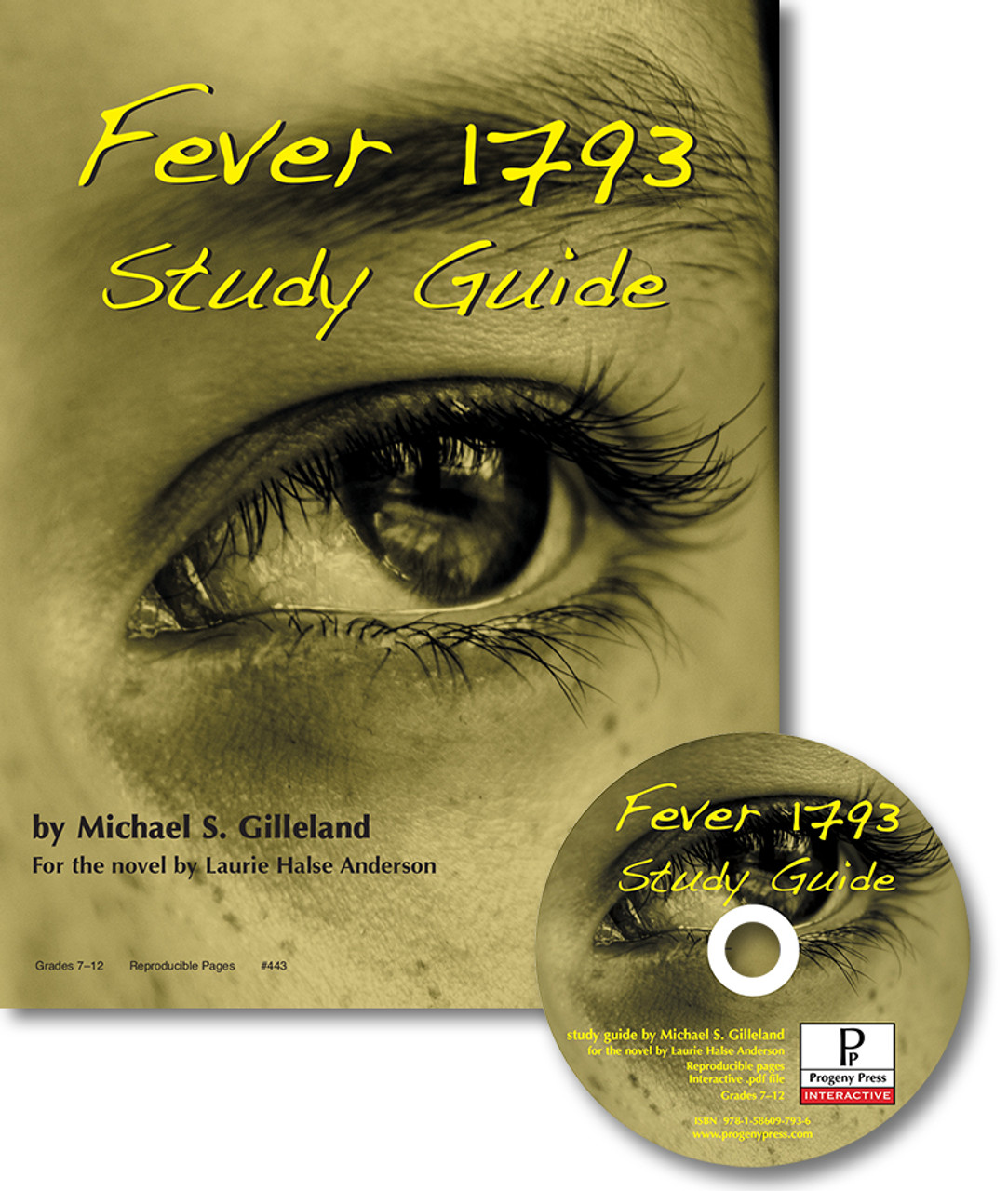
Fever 1793 Literature Study Guide
Select the Printed Workbook or CD to see format-specific information, features, and included materials.
First published in 2000, Fever 1793 is a harrowing but hopeful story of the Philadelphia, Pennsylvania, yellow fever outbreak of 1793. Fourteen-year-old Mattie helps run the family coffeehouse with her mother, grandfather, and coffeehouse cook Eliza, when rumors start circulating of a fever rising in Philadelphia. As the sweltering heat of summer continues, the yellow fever epidemic rages through Philadelphia and Mattie is separated from her family. Mattie faces great hardships and pain, but also great kindness, strength, and determination. And when Mattie is reunited with Eliza, and the epidemic ends and her mother returns, Mattie finds she is a much more capable and strong young woman than she had imagined.
What Progeny Press' Fever 1793 Literature Curriculum Study Guide provides your High School student:
ELA Built for Ages 13–18 • Grades 7–12
Our faith-based literature study guide helps students strengthen their reading and comprehension skills through engaging, age-appropriate activities.
English/Language Arts Credit: This High School level literature curriculum offers a one-quarter credit for students.
Author Biography: Learn more about the life of Laurie Halse Anderson and gain valuable context and background.
Background Information: Philadelphia as the United States capital and the effects of Yellow Fever.
Before-You-Read Activities: Write a research paper on yellow fever, dig into the demographics and geographical information of Philadelphia in the 1790s, and follow the characters' journeys on a map to gain contextual insights.
Vocabulary: Master words from the novel, engaging in a variety of activities designed to stimulate retention and growth.
Literary Techniques: Explore a wide array of literary techniques, understanding their applications and significance. Encounter concepts like antonyms and synonyms, the power of repetition, onomatopoeia, vivid imagery, thought-provoking maxims, overblown hyperboles, the art of irony, paradox, comparison and contrast. Learn the beauty of similes and metaphors, the humanizing touch of personification, juxtaposition, idioms, enlightening allusions, rhythmic alliteration, assonance, anthropomorphism, and so much more.
Moral Lessons and Character Values: Analyze the moral situations throughout the book including misfortune, wisdom from God, how to treat others, positive mental focus, prayer, seasons in life, rumors and dissension, discerning truth, despair, sensitivity and kindness, and hope.
Activities and Writing Assignments: Conduct research assignments, activities, and more.
Suggestions for Further Reading: Continue your reading journey with an in-depth reading list of books by the same author(s) and other books that tie in with, or are similar to, Fever 1793.
Fever 1793 Literature Study Guide - Workbook
Formatted with your High School student in mind, Progeny Press literature study guides provide in-depth lessons and writing assignments that strengthen reading comprehension, expand vocabulary, and develop advanced literary analysis and essay writing skills. Each guide challenges students to think critically and engage meaningfully with the text, without unnecessary busywork that diminishes the joy of reading.
For over 30 years, homeschool families, co-ops, and Christian schools worldwide have trusted Progeny Press to provide rigorous, faith-based English and Language Arts curriculum that inspires thoughtful readers and confident writers.
What Progeny Press' Fever 1793 Literature Curriculum Study Guide provides your High School student:
ELA Built for Ages 13–18 • Grades 7–12
Our faith-based literature study guide helps students strengthen their reading and comprehension skills through engaging, age-appropriate activities.
English/Language Arts Credit: This High School level literature curriculum offers a one-quarter credit for students.
Author Biography: Learn more about the life of Laurie Halse Anderson and gain valuable context and background.
Background Information: Philadelphia as the United States capital and the effects of Yellow Fever.
Before-You-Read Activities: Write a research paper on yellow fever, dig into the demographics and geographical information of Philadelphia in the 1790s, and follow the characters' journeys on a map to gain contextual insights.
Vocabulary: Master words from the novel, engaging in a variety of activities designed to stimulate retention and growth.
Literary Techniques: Explore a wide array of literary techniques, understanding their applications and significance. Encounter concepts like antonyms and synonyms, the power of repetition, onomatopoeia, vivid imagery, thought-provoking maxims, overblown hyperboles, the art of irony, paradox, comparison and contrast. Learn the beauty of similes and metaphors, the humanizing touch of personification, juxtaposition, idioms, enlightening allusions, rhythmic alliteration, assonance, anthropomorphism, and so much more.
Moral Lessons and Character Values: Analyze the moral situations throughout the book including misfortune, wisdom from God, how to treat others, positive mental focus, prayer, seasons in life, rumors and dissension, discerning truth, despair, sensitivity and kindness, and hope.
Activities and Writing Assignments: Conduct research assignments, activities, and more.
Suggestions for Further Reading: Continue your reading journey with an in-depth reading list of books by the same author(s) and other books that tie in with, or are similar to, Fever 1793.
What Will You Need?
A Complete Language Arts Experience with Progeny Press
- A copy of the Fever 1793 novel
- A copy of the Fever 1793 study guide workbook
- A Bible (digital or physical)
- A dictionary (student-friendly or online)
Created for upper-level learners, this guide strengthens critical thinking and encourages polished writing while helping students master essential ELA concepts.
Designed for YOU
- Homeschool families looking for Christian literature curriculum
- Schools looking for top quality ELA materials
- Parents wanting to build reading comprehension and character
- Co-ops and small group instruction
These guides work well on their own or alongside your preferred grammar and writing program.
Features and Benefits FAQ – Progeny Press Physical Literature Study Guide:
Why Schools & Families Love Our Printed Workbook Literature Study Guides:
- Premium Print Format: Perfect bound 8.5x11 study guide with durable heavy gloss cover and quality interior paper designed for long-term classroom and homeschool use.
- Answer Key Made Simple: Full detailed answer key included on perforated pages for quick removal before student use, making instruction easier for teachers and parents.
- Student-Friendly Design: Built-in space for written answers supports active learning, critical analysis, and organized responses directly inside the book.
- Reproducible for Classroom Use: Approved for classroom copying, making this an ideal choice for Christian schools, co-ops, and group instruction.
- Faith-Based Curriculum: Each literature guide integrates Christian worldview connections with literature study, encouraging both academic growth and character development.
- Open-and-Go Teaching: Clear lesson structure and teacher guidance allow parents and instructors to begin immediately without extra preparation. No extra devices needed. Just the book, a pencil, and a positive attitude!
- Comprehensive ELA Coverage: Strengthens reading comprehension, writing skills, vocabulary development, and literary analysis within one complete language arts program.
- Trusted for Over 30 Years: Chosen by homeschool families, Christian schools, and educators seeking reliable, high-quality literature study resources.
All of Progeny Press' language arts PDF download unit lessons are written from a Christian worldview!